





Technical inspection
Technical inspection of fitness equipment in Luxembourg
A structured look at the machines you are responsible for: what condition they are in, what is wearing, what should be replaced — documented, so you can act on it.
- Visual, functional and mechanical inspection
- Focus on wear at the most heavily loaded components
- A written result with prioritised recommendations


What it is
An assessment, not a repair — and not a certification
A technical inspection answers one question: what condition is this equipment actually in? It is deliberately separate from repair and maintenance, because the value lies in the assessment itself — an unbiased look at every machine, recorded in a way you can use for planning, budgeting and internal documentation.
That matters most where someone else uses the equipment. A studio operator, a hotel, a school, a physiotherapy practice, a residential building or a company with a staff gym all have a practical responsibility for the machines they make available. Frayed cables, loose connections, cracked upholstery and worn safety components are exactly the things that are easy to overlook in daily operation and hard to explain afterwards.
This service is a technical inspection and condition assessment carried out by experienced fitness equipment technicians. It is not a certification, an accreditation, a TÜV inspection or a legally prescribed test under Luxembourg law. If your insurer, operator obligation or internal quality system requires a specific formal inspection, please check the exact requirement before booking — and tell us what it says, so we can advise honestly whether we can cover it.
What you receive
- A machine-by-machine record of the condition found
- Notes on wear, damage, missing parts and misuse
- An assessment of the most heavily loaded components
- Prioritised recommendations: act now, plan, keep watching
- A view on repair feasibility where a defect was found
- A proposal for sensible maintenance intervals
Scope
What we inspect
Three perspectives on the same machine — what can be seen, what can be felt in operation, and what has to be checked component by component.
Visual inspection
- Frame, welds and load-bearing structure
- Covers, guards and protective panels
- Upholstery, grips and contact surfaces
- Cables and cable routing over the full length
- Belts, straps and chains
- Visible corrosion, cracks and deformation
- Labels, warnings and type plates
Functional inspection
- Start-up behaviour and console function
- Running quality across the speed and load range
- Resistance behaviour and its consistency
- Adjustment mechanisms and locking devices
- Emergency stop and safety key function
- Noise and vibration under load
- Display, sensor and programme behaviour
Mechanical inspection
- Bolts, connections and torque-critical fixings
- Bearings, rollers and guide components
- Pulleys, cable ends and anchor points
- Weight stacks, selector pins and guide rods
- Play in joints and moving arms
- Drive systems, belt tension and alignment
- Wear measurement where a specification exists
Focus points
The components that matter most
Not everything on a machine carries the same risk. These are the parts where wear has consequences beyond a noise.
- 01
Steel cables and end fittings
Broken strands, crushing, corrosion and deformed end fittings. A cable on a loaded weight stack is the single most safety-relevant wear part on a strength machine.
- 02
Pulleys and anchor points
Wear grooves, bearing play and out-of-true running. A pulley that no longer runs true destroys the cable that runs over it.
- 03
Bolts and load-bearing connections
Bolts loosen through vibration and load cycling. Adjustment mechanisms, arm mountings and frame connections are checked specifically.
- 04
Frames and welds
Cracks, deformation and corrosion in the load-bearing structure — rare, but the one finding that takes a machine out of service immediately.
- 05
Running belts, decks and drive systems
Belt wear, deck condition, tension and alignment, drive belt condition and motor behaviour under load.
- 06
Safety devices
Emergency stop, safety key, locking pins, guards and covers — everything that is supposed to prevent an incident rather than a fault.
Process
How an inspection is carried out
Inventory
You send the list of machines — type, manufacturer, quantity and location.
Inspection on site
Each machine is inspected visually, functionally and mechanically in a fixed sequence.
Assessment
Findings are classified by urgency and, where relevant, by repair feasibility.
Report & recommendations
You receive the documented result with clear next steps for each machine.
Where a defect found during the inspection can be corrected immediately and safely, we can do so during the same visit by arrangement.
Documentation
Findings you can plan with
An inspection is only useful if the result survives the visit. We document per machine, not per floor, and we separate what has to happen now from what belongs in next year budget.
For operators this usually becomes the basis for two decisions: which machines get repaired or refitted, and which ones are approaching the point where replacement is the more sensible investment. For institutions and property managers, it is often also the record that shows equipment is being looked after systematically.
Tell us in advance if the documentation has to fit a particular internal format or checklist — we can structure the record accordingly.
- Machine-by-machine condition record
- Findings classified by urgency
- Repair feasibility where a defect was found
- Recommended replacement parts
- Proposal for the next inspection or maintenance interval


Inspection work
What gets looked at closely
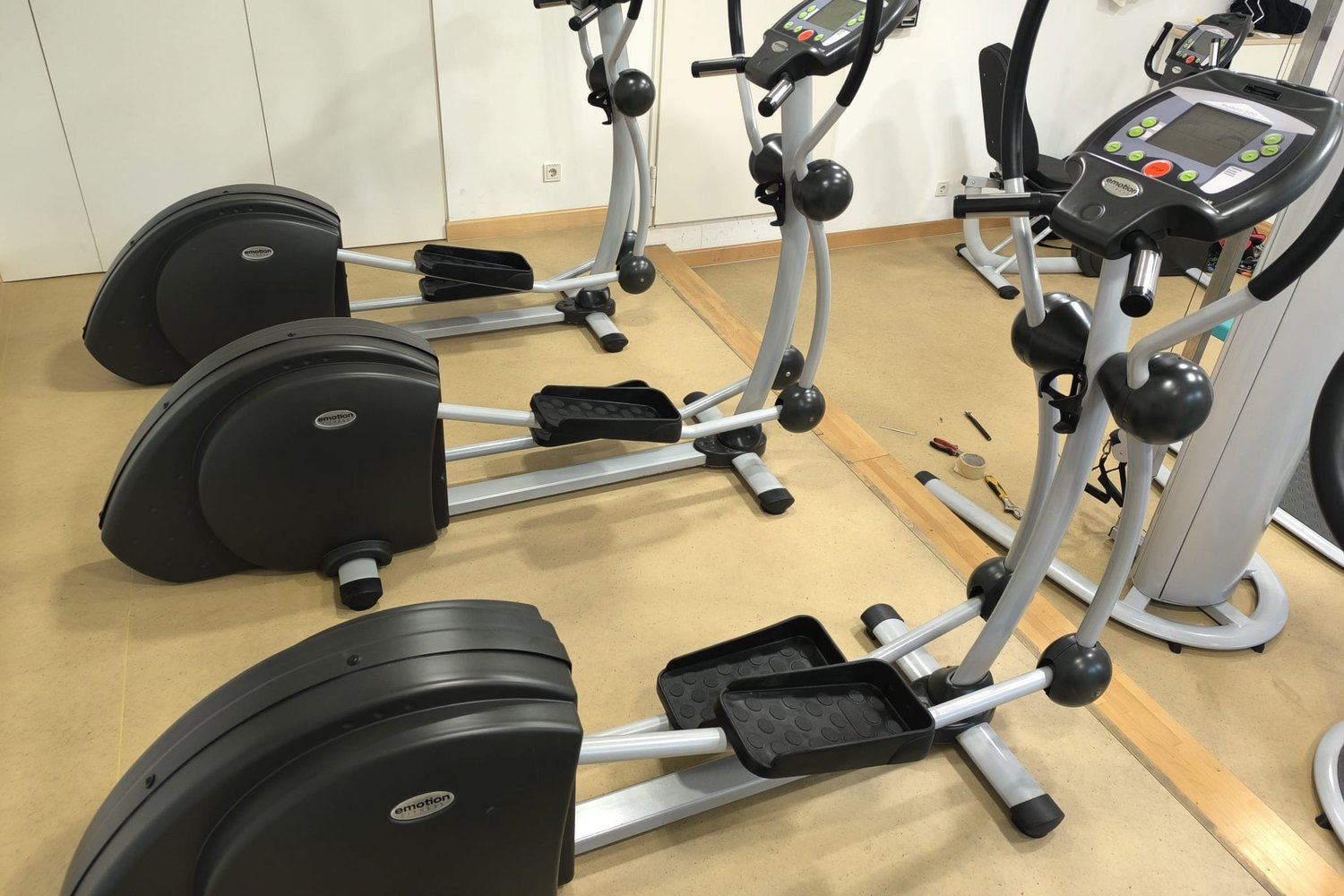
Working through the cardio row machine by machine 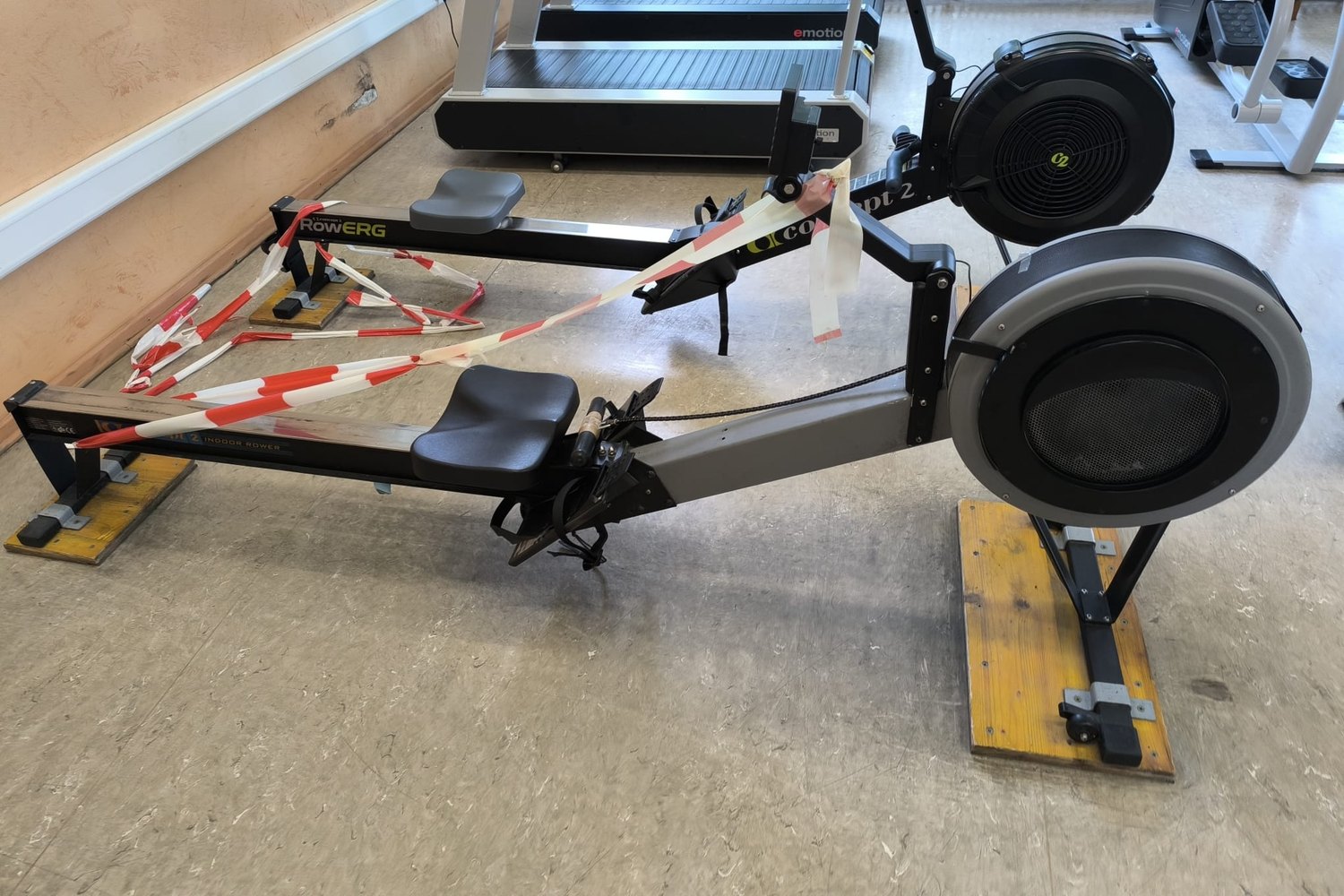
Taped off until the defect is put right 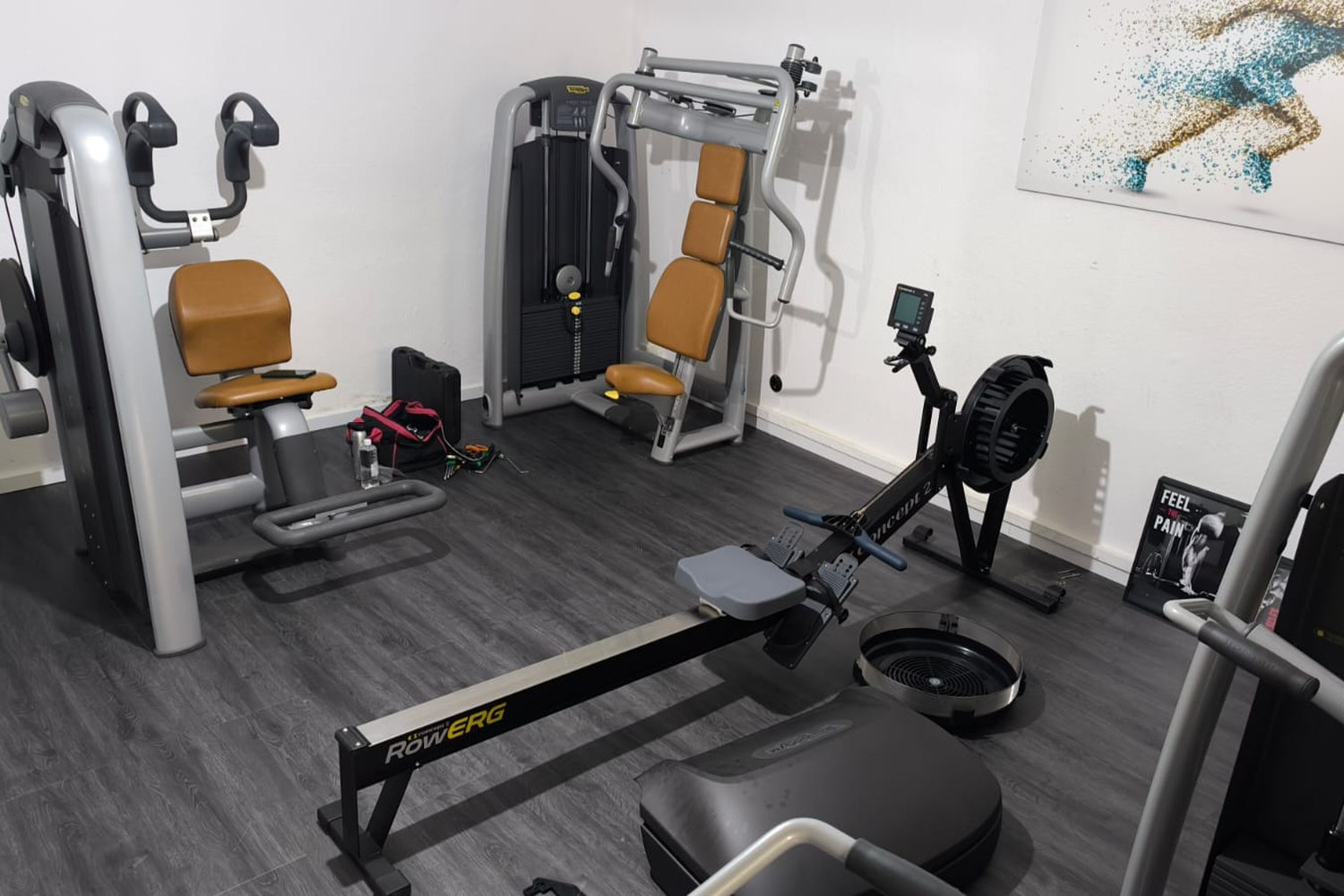
On site: tools out, the whole inventory in view


Related services
What usually follows an inspection
Inspection FAQ
Questions about technical inspections
Is this a legally required inspection?
No. We carry out a technical inspection and condition assessment by experienced fitness equipment technicians. It is not a certification, an accreditation or a legally prescribed test. If a specific formal inspection is required in your case, check the exact requirement first and tell us what it says.
How often should equipment be inspected?
For commercial equipment in daily use, an annual structured inspection is a common and sensible rhythm, supplemented by regular maintenance in between. Equipment with very high usage, or in hotels and public facilities where users are unsupervised, is often looked at more frequently.
Can you inspect equipment before we buy it?
Yes. A condition assessment before purchasing used equipment is one of the most useful things we do — it tells you what the machines will still cost you after the purchase price.
Do you repair defects during the inspection?
The inspection itself is an assessment. Where a defect can be corrected immediately and safely, we can do it during the same visit by arrangement — otherwise it goes into the findings with a repair recommendation.
What happens if you find something dangerous?
We tell you immediately rather than in a report three days later, and we recommend taking the machine out of use until the defect is corrected. Safety-relevant findings are always flagged separately.
Do you inspect private equipment as well?
Yes, although for a single home machine a maintenance visit usually covers the same ground more practically. An inspection makes more sense when several machines are involved or when you need documentation.
Can you inspect a whole studio in one visit?
Yes. Send the inventory in advance so we can estimate the time realistically. For larger floors we agree a sequence that keeps disruption to your operation as low as possible.