





Upholstery restoration
Upholstery restoration for fitness equipment in Luxembourg
Split seams, cracked seat pads and worn rollers make a perfectly sound machine look finished long before it is. We strip the padding back, rebuild it and cover it again.
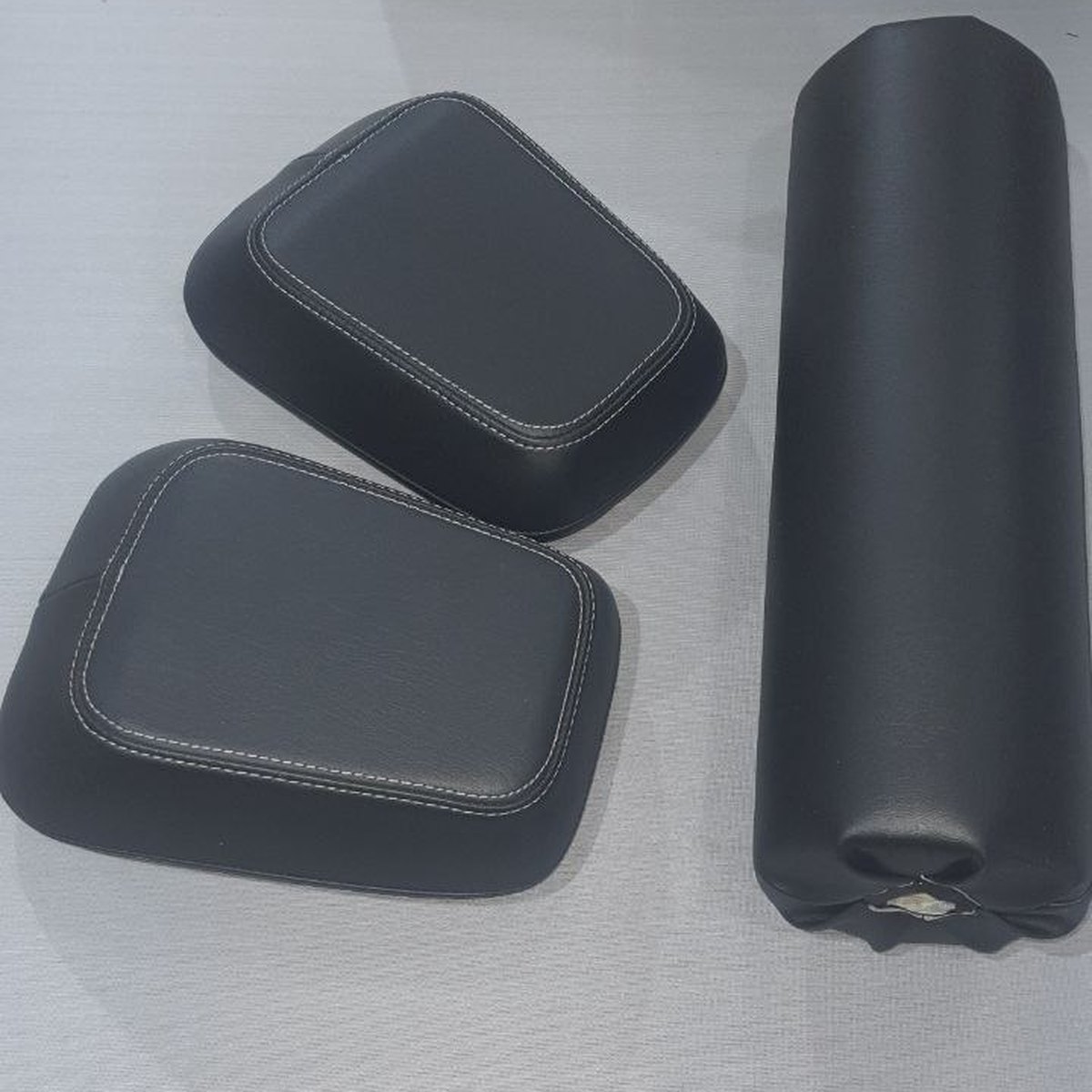
- Seats, backrests, pads and rollers recovered
- Foam rebuilt or replaced, not covered over
- Hard-wearing upholstery material for gym use


What it is
The frame outlives the padding — by years
A commercial strength machine is built to survive a decade or more of daily use. Its upholstery is not. Foam compresses, seams open under repeated load, and the cover material hardens, cracks and finally tears — usually along the front edge of the seat, the top of the backrest and the roller pads that take the most contact.
That damage is almost always cosmetic and hygienic rather than structural, which is exactly why replacing the whole machine over it makes no sense. The steel is fine, the bearings are fine, the weight stack is fine. Recovering the pads brings the machine back to something you are happy to put in front of members, guests or patients — at a fraction of what a replacement costs, and without a delivery lead time.
There is a practical side too. Torn vinyl cannot be disinfected properly: moisture and sweat get into the foam through the split and stay there. In a studio, a hotel gym, a physiotherapy practice or a care facility, that is the point at which worn upholstery stops being a question of appearance.
What we recover
- Seat pads and seat cushions
- Backrests and chest pads
- Leg, ankle and thigh rollers
- Arm, shoulder and preacher pads
- Bench pads on flat, incline and decline benches
- Head and neck supports on rehabilitation equipment
- Handle grips, end caps and contact surfaces where they belong to the same job
Scope
What we take on
The same work applies to almost every kind of equipment — what changes is how the pad is mounted and how much of the machine has to come apart to reach it.
Strength equipment
- Selectorized machine seats and back pads
- Plate-loaded machine pads
- Leg curl, leg extension and abductor rollers
- Chest, shoulder and arm pads
- Preacher curl and row chest pads
- Multi-station and cable machine seats
- Flat, incline, decline and utility benches
Cardio & rehabilitation
- Exercise bike and recumbent bike seats
- Recumbent backrests and side supports
- Rowing machine seat pads
- Stepper and climber contact surfaces
- Physiotherapy and rehabilitation benches
- Treatment couches and stretching benches
- Head, neck and lumbar supports
Materials & finish
- Hard-wearing synthetic leather for commercial use
- Foam replaced by density, not by guesswork
- New base boards where the original has failed
- Stainless or coated fixings instead of rusted staples
- Colour matched as closely as the material allows
- Contrasting colours where you want the change visible
- Logos and colour schemes on request
Damage patterns
What actually fails on a pad
Upholstery rarely fails all at once. Recognising which stage a pad has reached tells you whether it needs a cover, a full rebuild or a new base.
- 01
Open seams
The stitching gives way at the corner or along the front edge first. Caught early this is the cheapest repair there is; left alone, the cover peels back and the foam starts absorbing everything.
- 02
Cracked and hardened covers
Cleaning agents, sweat and UV light make synthetic leather brittle. It cracks in a fine web first, then splits. At that point the surface can no longer be hygienically wiped down.
- 03
Compressed foam
A seat that has gone flat and hard changes how the exercise feels and puts the user closer to the base board. New foam of the right density restores the original geometry — not just the look.
- 04
Torn rollers
Leg and ankle rollers take concentrated load on a small area and are usually the first thing to go. They are also the easiest part to swap while the machine stays in place.
- 05
Failed base boards
Once moisture has been sitting in the foam, the wooden base underneath swells and delaminates. Covering over a soft base is wasted work — the board gets replaced.
- 06
Corroded fixings
Rusted staples and screws stain the new cover from behind within months. Everything that holds the pad together is renewed with the upholstery.
Process
How a recover is carried out
Photos and count
You send photos of the pads and the machines, plus how many pieces are involved.
Assessment and quote
We say what each pad needs — cover only, new foam, or a new base — and what it costs.
Removal
Pads are removed on site and labelled per machine, or the machine comes along if it is small enough.
Rebuild and refit
Stripped, rebuilt, covered and refitted — with adjustment and a function check on the machine.
Small quantities and single rollers can often be handled during a maintenance or repair visit, so there is only one call-out rather than two.
Downtime
Your floor keeps working while the pads do not
The part that leaves the building is the pad, not the machine. For most equipment the seat, backrest and rollers unbolt in minutes, which means a machine is out of service for the removal and the refit — not for the whole time the upholstery is being rebuilt.
Where a machine cannot be left unusable at all, we agree a sequence: a first group of pads goes, comes back, and only then does the next group leave. For a studio that is the difference between a quiet week and a floor full of machines nobody can sit on.
For larger inventories it is usually worth combining the recover with a maintenance round. The machines are being worked on anyway, the pads come off during the same visit, and the wear that caused the damage in the first place gets looked at too.
- Pads removed and labelled machine by machine
- Equipment stays on the floor wherever possible
- Work sequenced in groups for busy studios
- Can be combined with maintenance or repair
- Refit including adjustment and function check

Upholstery work
A complete set, in the colour you choose
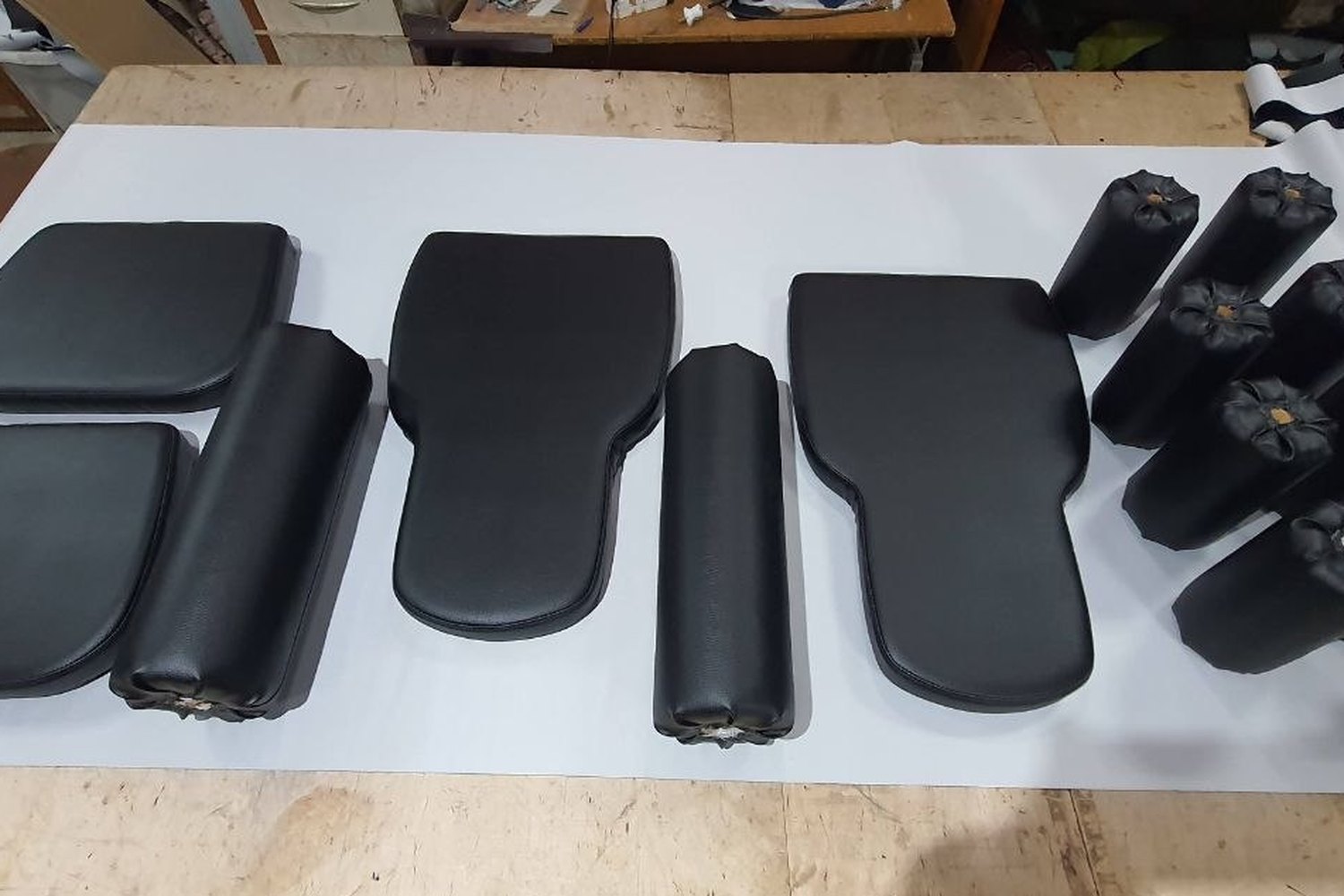
Complete set per machine 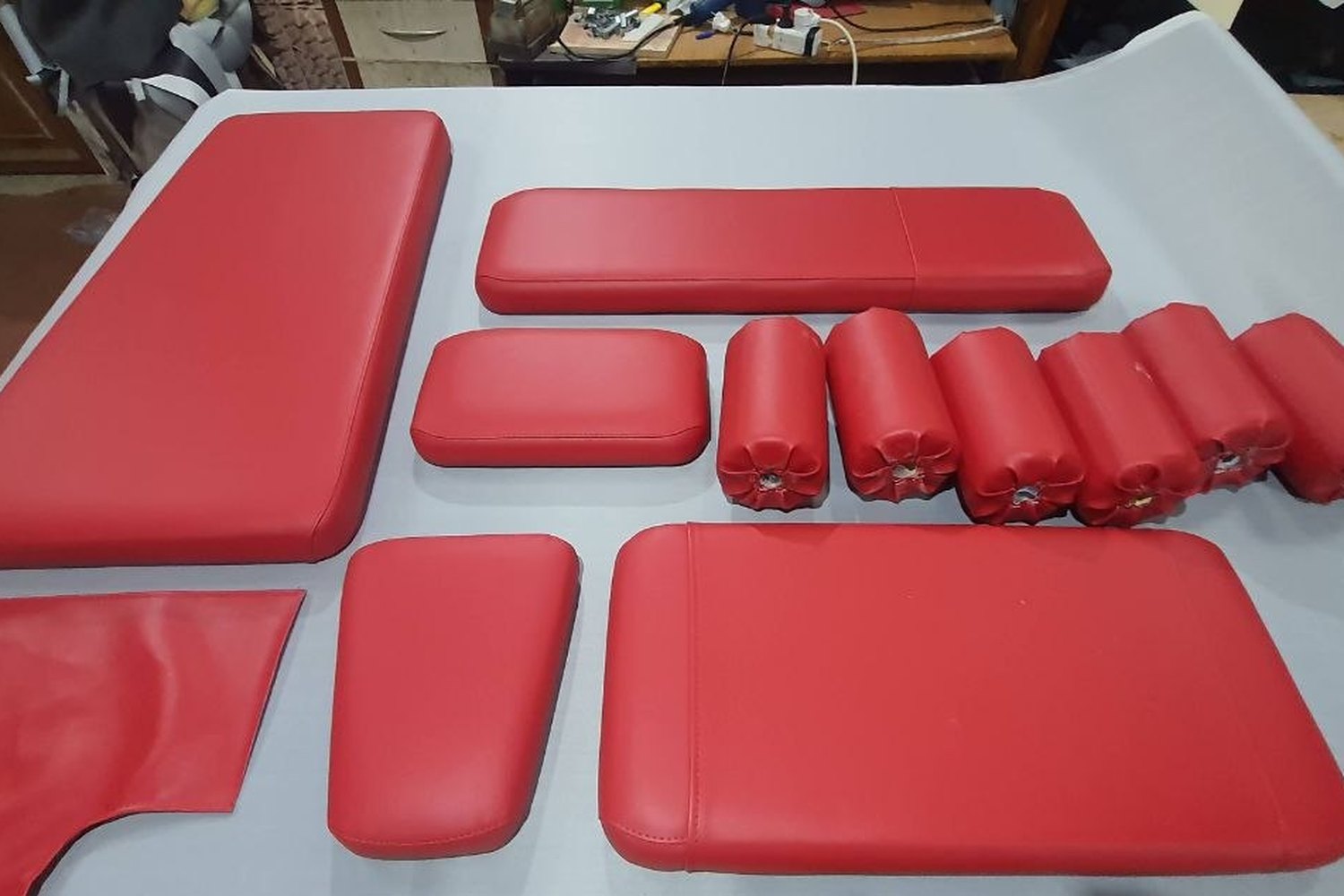
Colour follows your choice 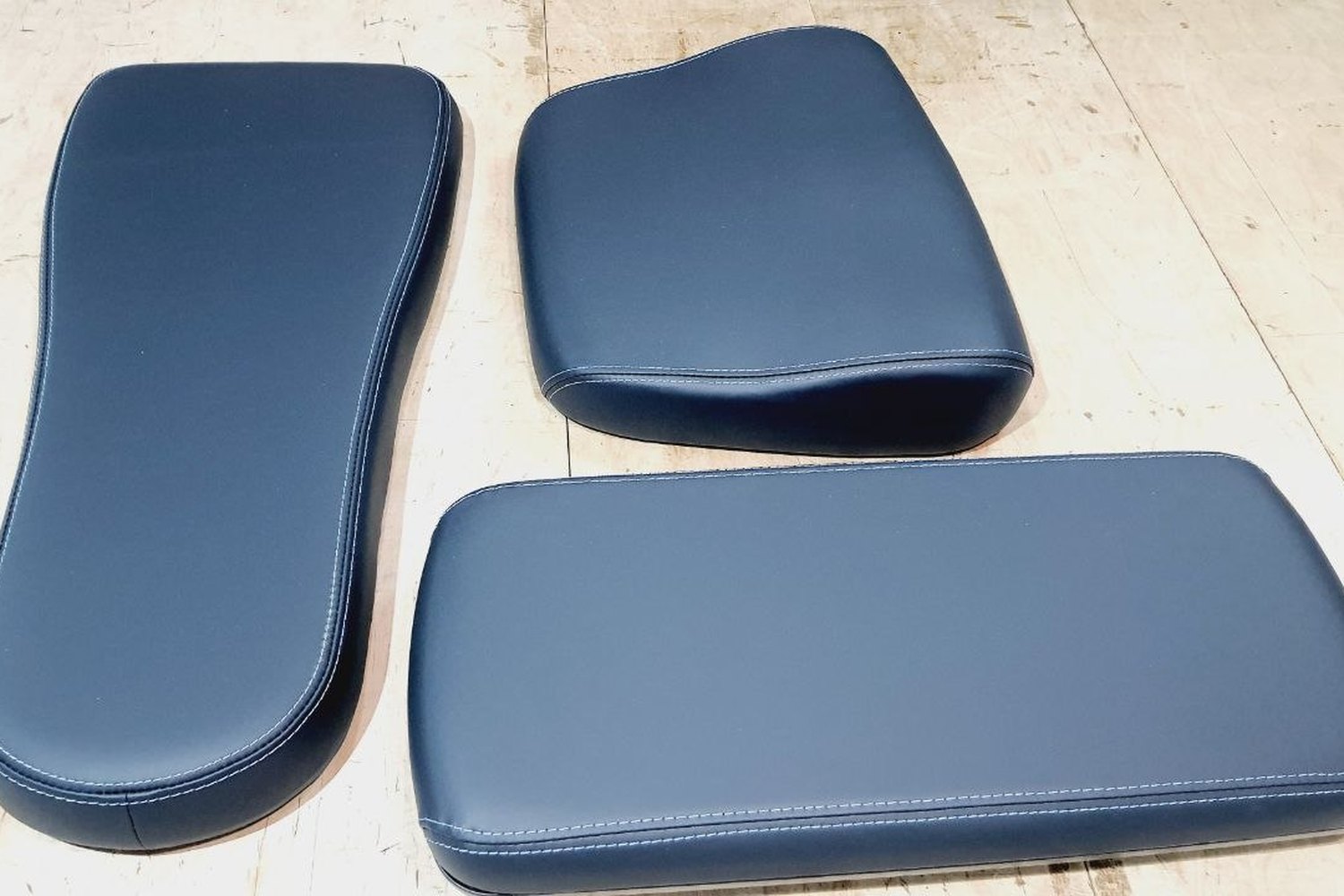
Finished and ready to refit


Related services
What usually goes with an upholstery job
Upholstery FAQ
Questions about upholstery restoration
Do you replace the foam or only the cover?
It depends on the pad. If the foam still has its shape and firmness, a new cover is enough. If it has compressed, hardened or absorbed moisture, it gets replaced — covering worn-out foam only hides the problem for a few months. We say which applies to each pad before the work starts.
Can you match the original colour?
We match as closely as the available material allows, which for standard black, grey, blue and red is usually very close. An exact match to a specific manufacturer shade cannot be promised, so for a mixed floor it is often better to recover a whole group of machines at once, or to choose a deliberate contrast.
Does the machine have to leave the building?
Normally not. The pads unbolt and travel; the machine stays where it is. Only where a pad is built into the frame, or the equipment is small enough to move easily, does the machine itself come along.
How long does it take?
The time depends on the number of pieces and on whether foam and base boards need replacing. We give a realistic window with the quote, and for larger inventories we split the work into groups so most of your floor stays usable throughout.
Is it worth recovering an older machine?
Usually yes, as long as the mechanics are sound — which is the part worth checking first. If you are unsure, a technical inspection tells you what condition the machine is really in before you spend anything on its appearance.
Do you do single pads for private customers?
Yes. A single bench pad or a pair of leg rollers from a home multi-gym is a normal job. Send photos and the measurements and we will tell you what is possible.
Can you use our club colours?
Yes. Colour combinations across seat and back pads are straightforward, and colour schemes across a whole floor are a common reason for doing the work in the first place. Tell us what you have in mind and we will confirm what the material range covers.