





Maintenance & servicing
Fitness equipment maintenance in Luxembourg
Planned servicing keeps machines quiet, safe and available. It also turns unpredictable breakdowns into work you can schedule around your opening hours.
- One-off maintenance or a recurring service programme
- Mechanical, electronic and safety-relevant checks
- Written findings and replacement recommendations
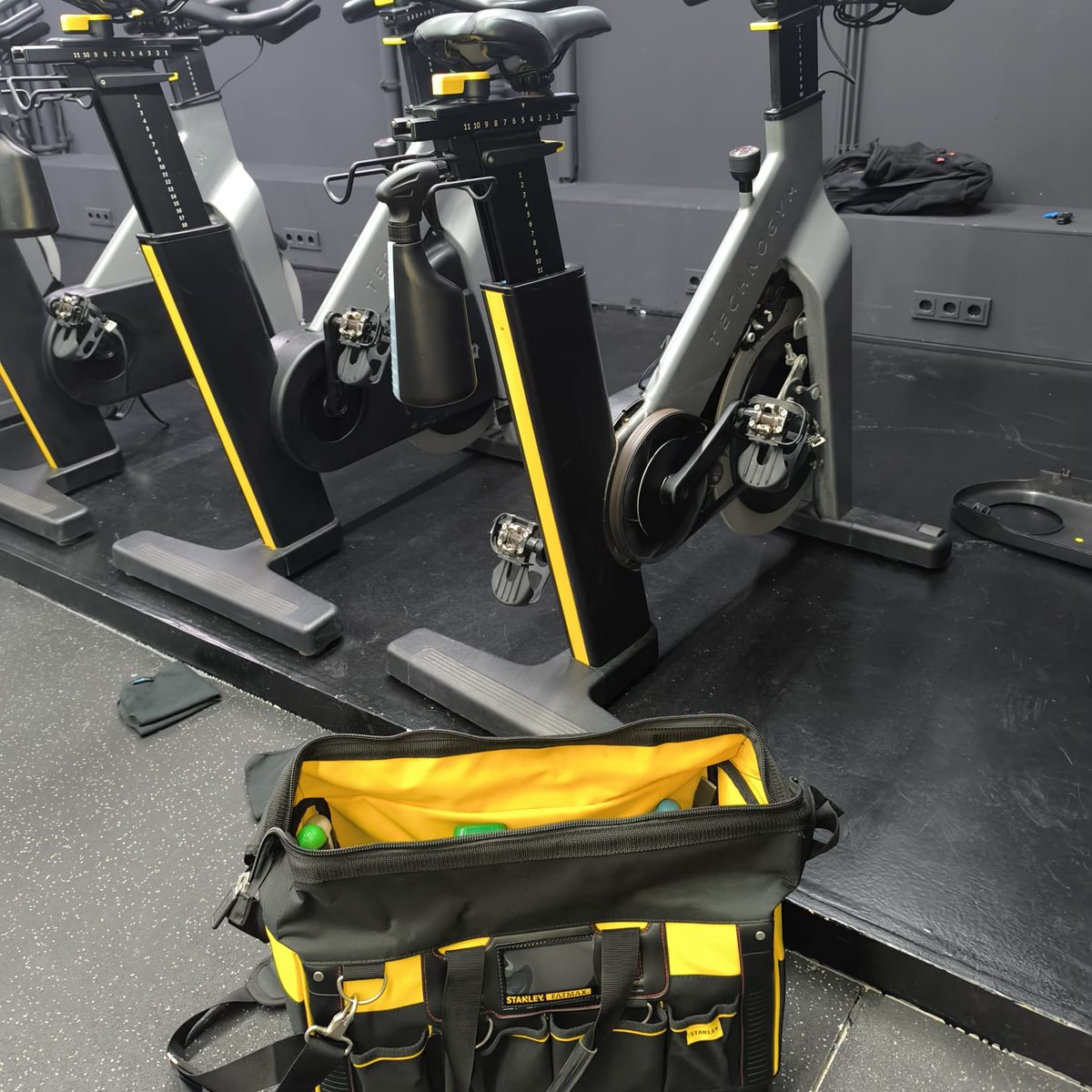
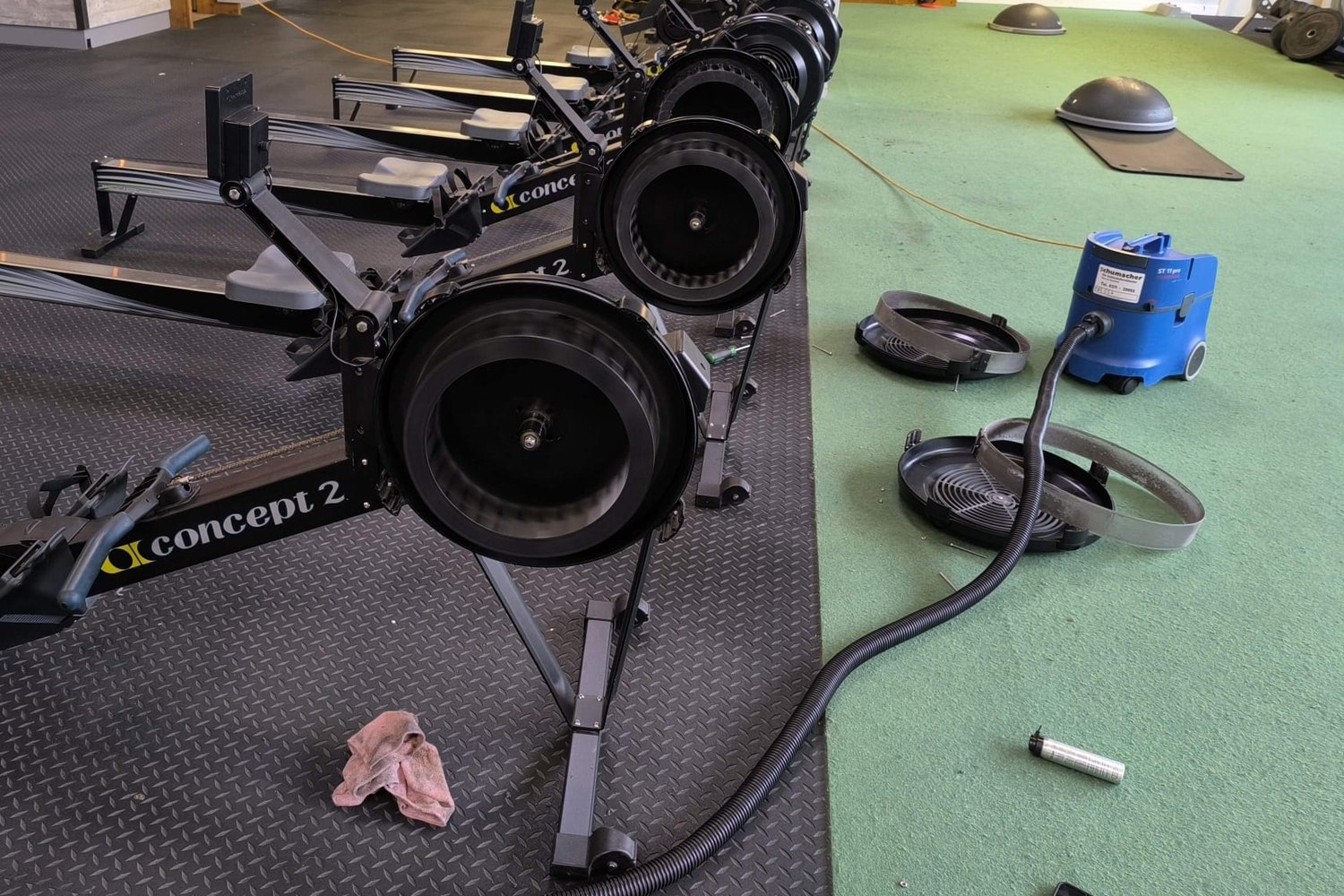
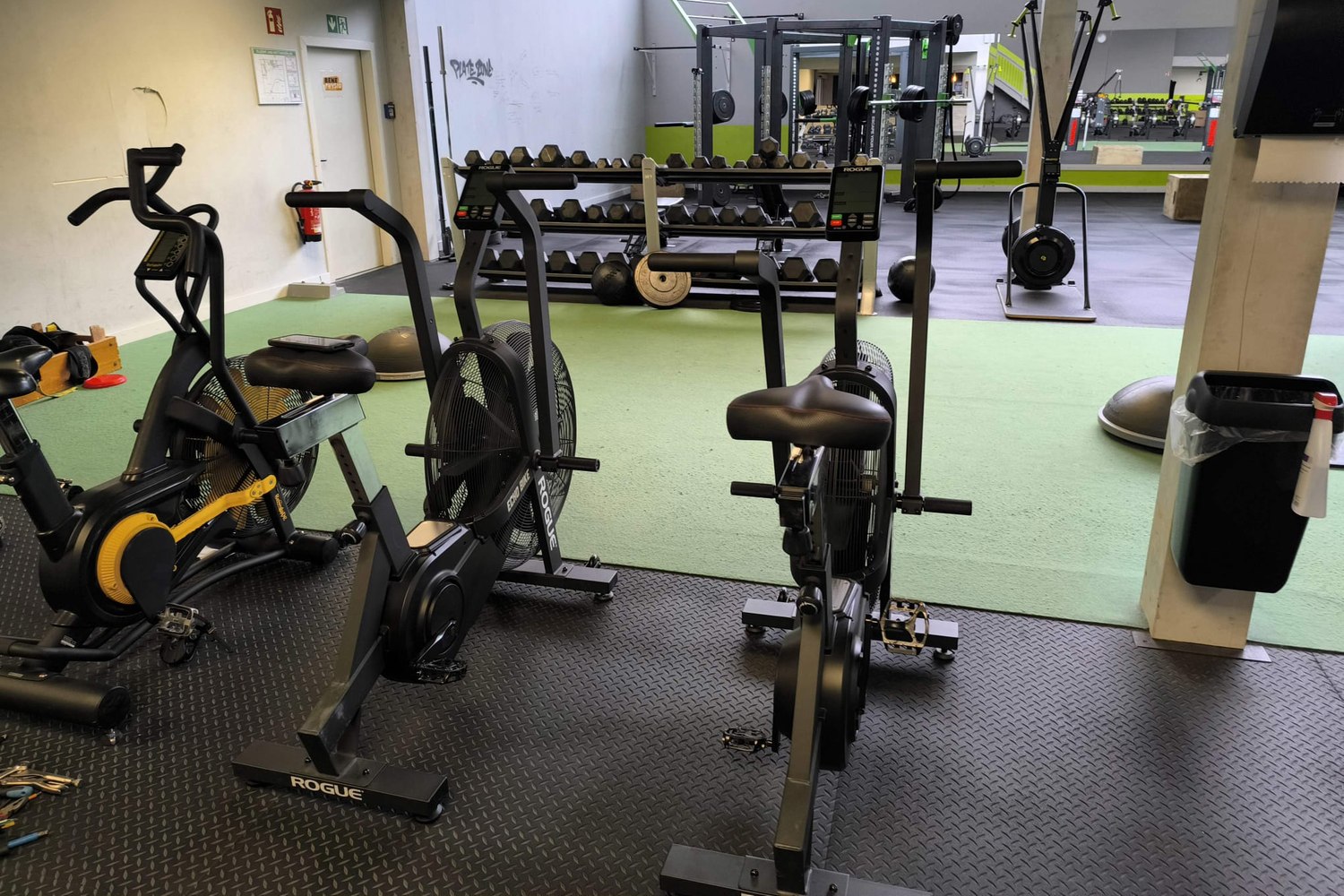
- Photo placeholderPHOTO: treadmill with the motor cover off, dust being removed.


Why it matters
Wear is predictable — failure is not
A commercial treadmill in a busy studio can run six to ten hours a day. In that time the running belt is loaded several hundred thousand times, dust and textile fibres are drawn into the motor compartment, and the belt tension slowly changes. None of this happens suddenly, and none of it is visible from the outside.
Preventive maintenance intervenes in exactly that window: before a slightly misaligned belt grinds the deck, before a dry bearing damages the roller shaft, before a frayed cable strand becomes a broken cable on a loaded weight stack.
For commercial operators the benefit is mostly economic — fewer machines out of service, longer intervals between major repairs, planned work instead of emergency call-outs. For private owners it is simpler: an expensive machine keeps running the way it did when it was new.
- Reduces unplanned downtime and emergency repairs
- Extends the usable life of wear-intensive components
- Keeps safety-relevant parts under regular observation
- Makes budgeting for repairs and replacements predictable
- Preserves the running quality members and users actually notice
Scope
What a maintenance visit includes
The exact scope depends on the machine type and its usage, but the structure is always the same: check, clean, adjust, assess, document.
Inspection & diagnostics
Everything that is checked before anything is touched.
- Technical inspection of the complete machine
- Electronic diagnostics and error memory readout
- Function test of all programmes and settings
- Check of displays, sensors and controls
- Assessment of running quality under load
- Safety inspection of protective covers and stop functions
Mechanical service
The hands-on part of the visit.
- Cleaning of technical components and motor compartment
- Lubrication where the manufacturer requires it
- Checking and retightening bolts and connections
- Belt inspection: running belts and drive belts
- Cable and pulley inspection
- Bearing, roller and guide component inspection
- Drive system inspection and belt tensioning
- Adjustment and alignment of moving assemblies
Assessment & documentation
What you get after the visit.
- Wear assessment of the relevant components
- Notes on damage or misuse found
- Recommendations for replacement parts
- Prioritisation: now, next visit, keep watching
- Documentation of the work carried out
- Suggested interval for the next service
Cleaning of technical components refers to the motor compartment, drive area, guide rails and cable runs — not to the daily surface cleaning your own staff carry out.
Two ways to organise it
One-off maintenance or a recurring programme
Both are useful — the difference is mainly how many machines you run and how many hours a day they are used.
| One-off maintenance | Recurring service programme | |
|---|---|---|
| Typical for | Private owners, small equipment inventories, machines that have not been serviced for a long time | Gyms, hotels, clubs, clinics, sports centres — anywhere equipment runs daily |
| Planning | Single appointment, arranged when needed | Fixed intervals agreed in advance, scheduled around your opening hours |
| Scope | Full service of the machines named in the request | Rolling service of the whole inventory, with a record from visit to visit |
| Advantage | Immediate improvement, clear picture of the current condition | Wear is tracked over time, parts can be ordered before they fail |
| Typical trigger | Noise, reduced performance, machine changing owner, before or after a move | Operating obligation, quality standard, budget planning, high usage |
Sensible intervals depend on usage hours, equipment type and environment. We suggest an interval after the first visit rather than selling a fixed package before we have seen the machines.
Process
How a maintenance visit runs
Equipment list
You send the machines, types and quantities — a photo of the floor is often enough to start.
Scheduling
We agree a date and sequence that keeps as many machines as possible available to your users.
Service on site
Machine by machine: inspection, cleaning, lubrication, adjustment, tightening, testing.
Findings & next steps
You receive the condition assessment, part recommendations and a proposal for the next interval.
By equipment type
What maintenance actually means on different machines
Treadmills
The most maintenance-intensive machines in any studio. The running belt and deck form a wear pair whose condition determines both running feel and motor load. We check belt tension and centring, measure or assess belt and deck wear, clean the motor compartment, check the drive belt, rollers and bearings, test the incline mechanism and read out the electronics. A treadmill that is serviced regularly runs noticeably quieter — users notice it before the technician does.
Cross trainers, ellipticals and stair climbers
Here the load sits in the joints: pivot bearings, link arms, pedal arms and the drive or resistance unit. Play in the bearings is the first sign, followed by knocking noises on direction change. We check and tighten connections, assess the bearings, inspect drive belts and resistance systems and verify that the movement path is still symmetrical.
Indoor cycles, spinning bikes and exercise bikes
Sweat is the main enemy. It reaches the frame, the seat and handlebar posts, the resistance mechanism and the bearing seats. We clean and check the affected areas, inspect the drive — belt or chain — the resistance unit and the brake system, check play in the bottom bracket and pedals, verify the adjustment mechanisms and test the electronics where fitted.
Rowing machines
Seat rollers, rail, handle strap or chain and the resistance unit — air, water or magnetic — determine the running quality. We inspect the strap or chain for wear, check the rail and rollers, verify the damper mechanism and the display, and clean the flywheel housing where it is accessible.
Selectorized and plate-loaded strength machines
The classic wear points are steel cables, pulleys, guide rods, weight stack bushings, bearings in the movement arms and the upholstery. We inspect the full cable run, check every pulley for smooth movement and true running, clean and lubricate the guide rods, check the selector pin and stack, tighten connections and assess the upholstery and grips.
Cable stations and multifunctional units
The more cable metres a machine has, the more inspection it needs. Cables are checked over their whole length for broken strands, deformation and crushing, pulleys for wear grooves and bearing play, and end fittings and attachment points for security. On these machines a cable inspection is not a comfort item — it is the core safety check.
Maintenance work
What we look at during a service visit
- Photo placeholderPHOTO: indoor cycle / spinning bike being serviced — resistance unit or drive area open.
Indoor cycles: drive, resistance and bearings - Photo placeholderPHOTO: cross trainer / elliptical, technician checking joints and link arms.
Cross trainers: joints and movement path - Photo placeholderPHOTO: weight stack with guide rods and cable — inspection and lubrication of the stack.
Weight stacks: guides, cables and pulleys
After the visit
Documentation you can actually use
A maintenance visit that leaves no trace is worth less than it should be. We record what was checked, what was serviced, what was found and what we recommend — per machine, not as a single sentence for the whole floor.
That record has a practical purpose. It tells you which machines are approaching a parts replacement, which ones should be watched, and where a repair is going to be needed before the next season. For operators with a budget cycle this is usually the most valuable part of the service.
Where documentation is required for internal quality management or for an operator obligation, tell us in advance so we can structure the record accordingly.
- Per-machine record of work carried out
- Findings and wear assessment
- Prioritised recommendations for parts
- Proposal for the next maintenance interval
Related services
Often combined with maintenance
Maintenance FAQ
Questions about preventive servicing
How often should fitness equipment be serviced?
It depends far more on usage hours than on the calendar. Commercial cardio equipment in daily use needs attention several times a year; strength machines less often; equipment in a hotel fitness room or a company gym is somewhere in between; private equipment used a few hours a week may need one visit a year. We propose an interval after we have seen how your machines are used.
Do you offer maintenance contracts?
We carry out recurring maintenance on an agreed schedule. Because the sensible scope and interval depend on the equipment, we prefer to define them after a first visit rather than to sell a standard package in advance.
Can maintenance be done while the studio is open?
Usually yes, machine by machine. For larger inventories we plan the sequence so that only a small part of the floor is unavailable at any moment. Where that is not practical, we schedule outside opening hours by arrangement.
What is the difference between maintenance and inspection?
Maintenance is active work on the machine — cleaning, lubricating, adjusting, tightening, replacing wear parts. A technical inspection is an assessment: the condition is examined and documented, without necessarily changing anything. Many customers combine the two.
Will you replace parts during a maintenance visit?
Small wear parts can often be replaced on the spot if we know about them in advance. Larger components — running belts, decks, cables, bearings — are ordered after the assessment and fitted at a follow-up visit, unless you tell us beforehand what to bring.
Do you maintain privately owned equipment too?
Yes. A home treadmill or multi-gym benefits from the same service as commercial equipment: belt tension, lubrication, cable and bolt checks and an electronics test. It simply needs it less often.
Can you service equipment from several sites?
Yes. For operators with more than one location in Luxembourg we plan the visits as a route so that travel time is shared between the sites.