





Repair service
Fitness equipment repair in Luxembourg
A machine that squeaks, stops, throws an error code or simply feels wrong under load does not have to be replaced. We find the actual cause and repair it on site.
- Cardio, strength, cable and rehabilitation equipment
- Mechanical damage, wear parts and electronic failures
- Commercial equipment and privately owned machines
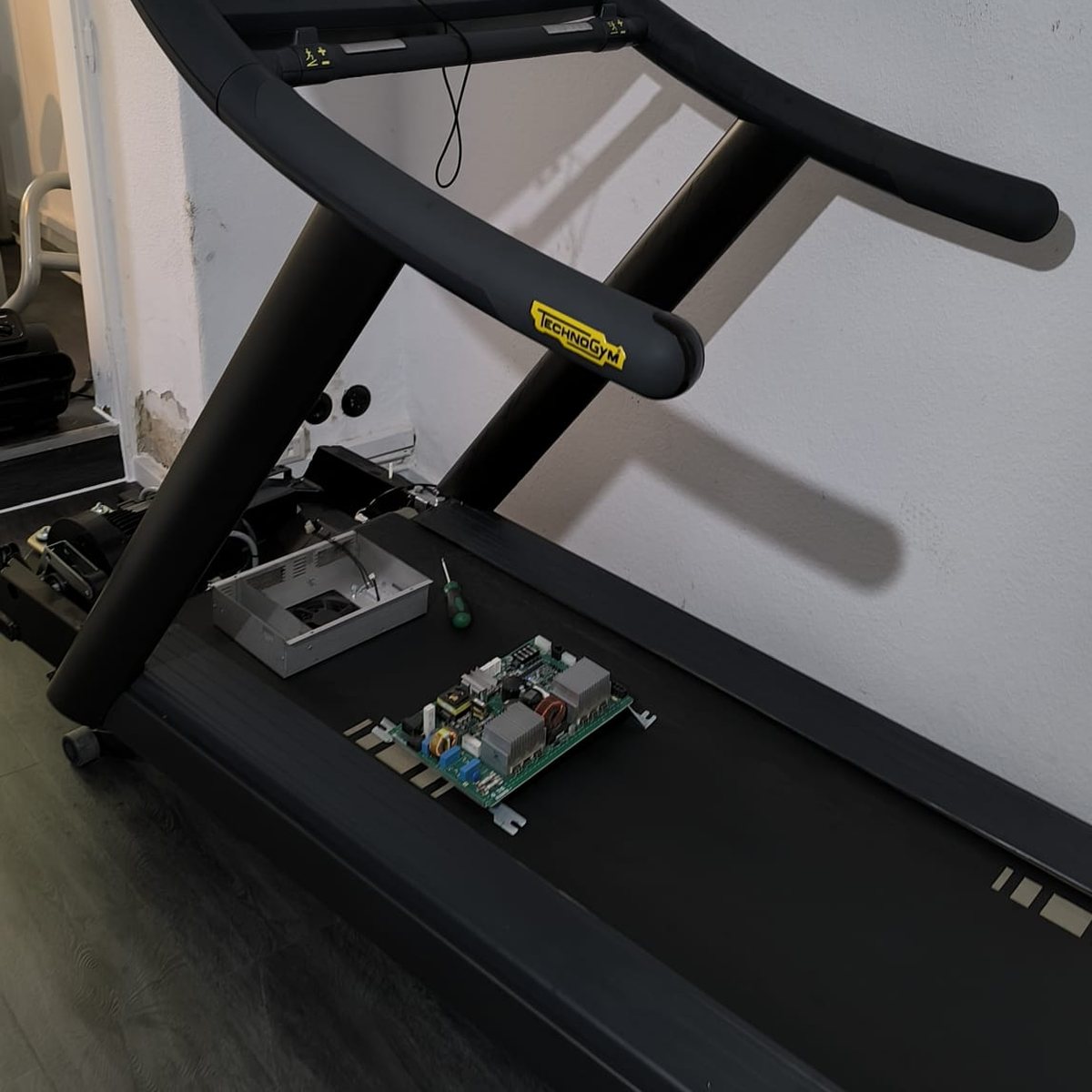


What this service is
Repair means finding the cause, not replacing parts until it works
Most fitness equipment failures announce themselves long before the machine actually stops. A slight rattle in the flywheel housing, a belt that has to be re-centred more often than it used to, a console that flickers when the incline motor starts. By the time the machine is standing still with an error code, several components are usually involved.
Our repair work therefore starts with diagnosis rather than with a parts list. We reproduce the fault under realistic load, isolate the subsystem — drive, resistance, electronics, structure — and only then decide what has to be replaced, adjusted or refurbished. That approach avoids the two classic outcomes of unstructured repair: parts that are changed without need, and a machine that fails again three weeks later because the underlying cause was never touched.
We work on site, in your studio, hotel, practice or home. Machines are heavy, awkward and expensive to transport; in the vast majority of cases the repair happens where the equipment stands. Only where a component genuinely has to go to a workshop do we remove it and bring it back.
What a repair job typically includes
- Verification of the reported fault on the machine itself, under load
- Systematic narrowing down of the cause (mechanics, electronics, structure)
- Assessment of which parts are worn, damaged or misadjusted
- Replacement or repair of the affected components
- Re-tensioning, alignment, lubrication and adjustment of the assembly
- Function and safety test before the machine goes back into use
- A summary of what was done and what should be watched next
Equipment
Which machines we repair
Commercial and consumer equipment, mechanical and electronic, from a single home treadmill to a full club floor.
Cardio equipment
- Treadmills
- Exercise bikes and upright bikes
- Recumbent bikes
- Indoor cycles and spinning bikes
- Cross trainers and elliptical trainers
- Rowing machines
- Stair climbers and step machines
- Arm ergometers
Strength equipment
- Selectorized machines with weight stacks
- Plate-loaded machines
- Cable machines and pulley stations
- Multifunctional stations and cable crossovers
- Smith machines and racks
- Benches and adjustable frames
- Functional training rigs
Specialised equipment
- Rehabilitation and therapy equipment
- Physiotherapy training devices
- Circuit training equipment
- Electronically controlled machines
- Purely mechanical machines
- Older equipment still in daily use
We are an independent service company. We work on equipment from many manufacturers, but we are not an authorised representative of any brand.
Typical faults
What actually breaks on fitness equipment
These are the failure patterns we see most often — and the symptoms that usually point to them.
- 01
Electronic failures
Machines that do not start, reset during use, lose their programme or show error codes. Causes range from damaged control boards and faulty power supplies to corroded connectors and failing sensors.
- Control boards
- Displays and consoles
- Sensors and speed pickups
- Wiring and connectors
- 02
Drive and belt problems
Slipping under load, jerking at low speed, a running belt that drifts to one side or a burning smell from the motor compartment — typically drive belts, running belts, motors or the deck.
- Drive belts
- Running belts and decks
- Motors and controllers
- Belt tension and alignment
- 03
Bearings and rollers
Grinding, humming or rumbling noises that change with speed. Front and rear rollers, flywheel bearings and pivot bearings wear silently for a long time and then fail quickly.
- Front and rear rollers
- Flywheel bearings
- Pivot and joint bearings
- Guide rods and bushings
- 04
Cables, pulleys and resistance
Frayed steel cables, pulleys that no longer run true, uneven or jerky resistance, weight stacks that stick — the classic wear pattern on cable and selectorized machines.
- Steel cables
- Pulleys and bearings
- Weight stacks and selector pins
- Magnetic and air resistance
- 05
Mechanical damage and play
Loose bolts, worn bushings, damaged frames or components, cracked welds, play in adjustment mechanisms — often the result of long service life or improper transport.
- Loose connections
- Damaged frames and covers
- Adjustment mechanisms
- Upholstery and grips
- 06
Noise and vibration
Abnormal noises are the most common reason customers call us. They are rarely the fault itself — they are the audible symptom of something that has started to wear.
- Squeaking and clicking
- Rumbling under load
- Vibration at speed
- Knocking on direction change
Process
From fault report to tested machine
Fault description
You describe the symptom, ideally with photos, a short video and the machine data from the type plate.
Remote assessment
We narrow down the likely cause, check parts availability and prepare the tools required.
Diagnosis on site
The technician reproduces the fault under load and verifies the cause before anything is dismantled.
Repair
Components are replaced, repaired or readjusted — including everything that has been affected by the fault.
Adjustment and test
Tension, alignment, lubrication and settings are restored, then the machine is tested under real load.
Handover
You receive a summary of the work, the parts used and what we recommend keeping an eye on.
If a required spare part is not available on site, we complete the diagnosis, secure the machine and agree a follow-up date once the part has arrived.
Spare and wear parts
Repairing rather than replacing — where it makes sense
The economics of fitness equipment are unusual. A commercial treadmill can cost as much as a small car, and its most heavily loaded parts — running belt, deck, rollers, drive belt — are wear items that are designed to be replaced.
We procure and fit wear and spare parts wherever they are available for the machine in question: running belts, drive belts, rollers, bearings, steel cables, pulleys, upholstery, grips, covers and electronic components. For older equipment we check whether compatible substitutes exist.
Where a repair is no longer technically sound or no longer economical, we say so directly. A repair feasibility assessment before the work starts is part of the service, not an extra.
- Availability check before the visit
- Compatible substitutes for discontinued parts where possible
- Complete replacement of a wear set instead of piece-by-piece repairs
- Honest repair-or-replace recommendation

Repair work
Examples of what a repair looks like
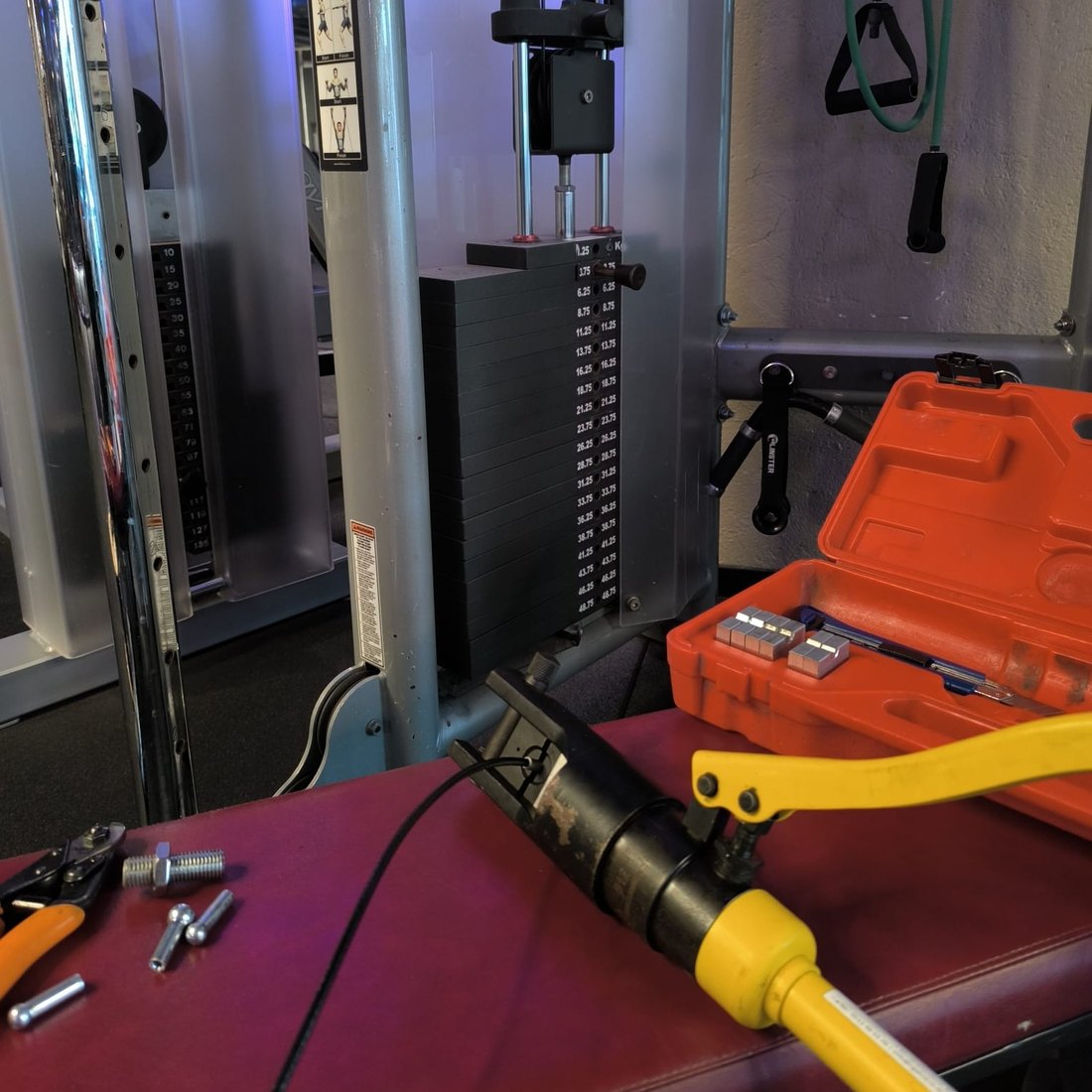
Cable replacement on a strength machine 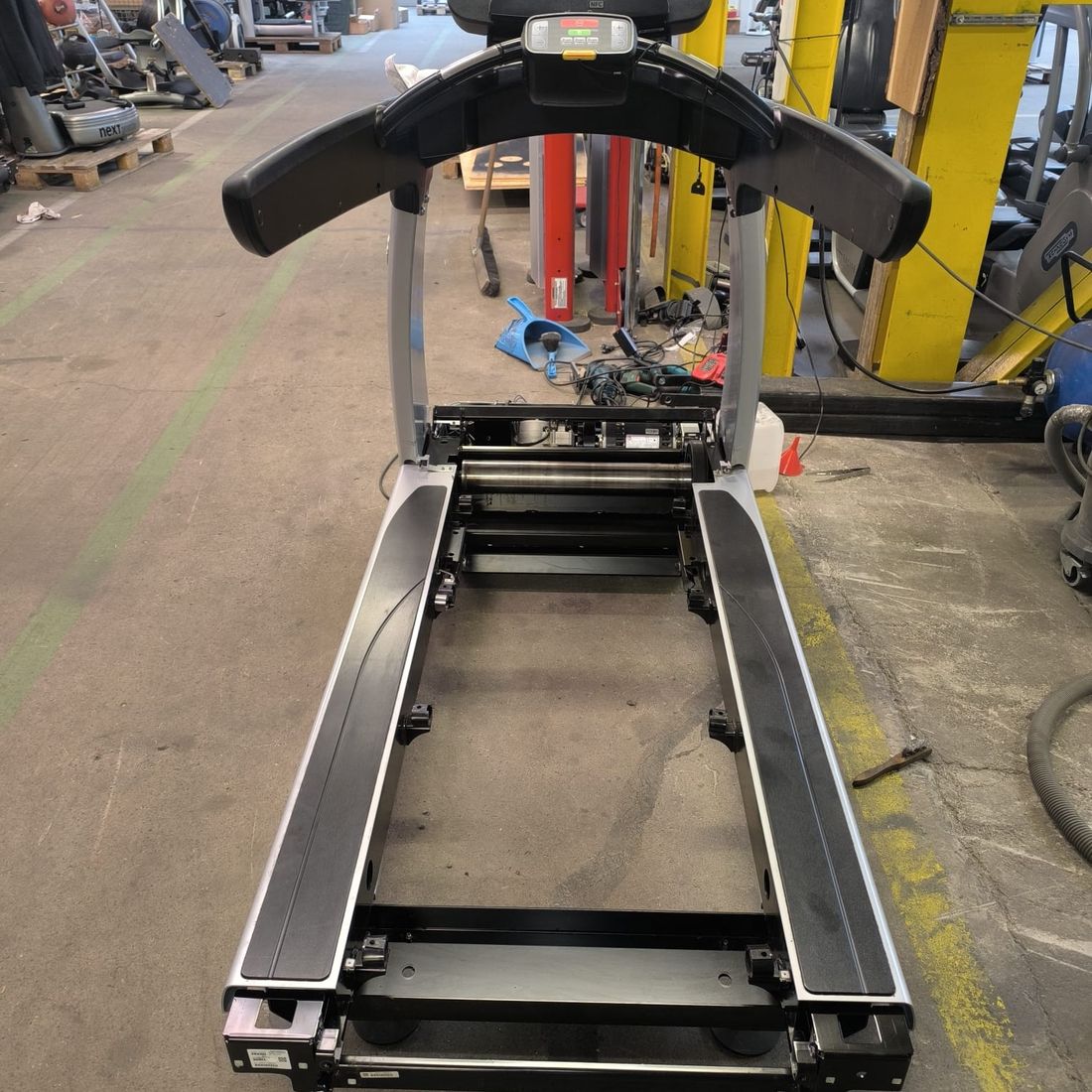
Treadmill stripped down 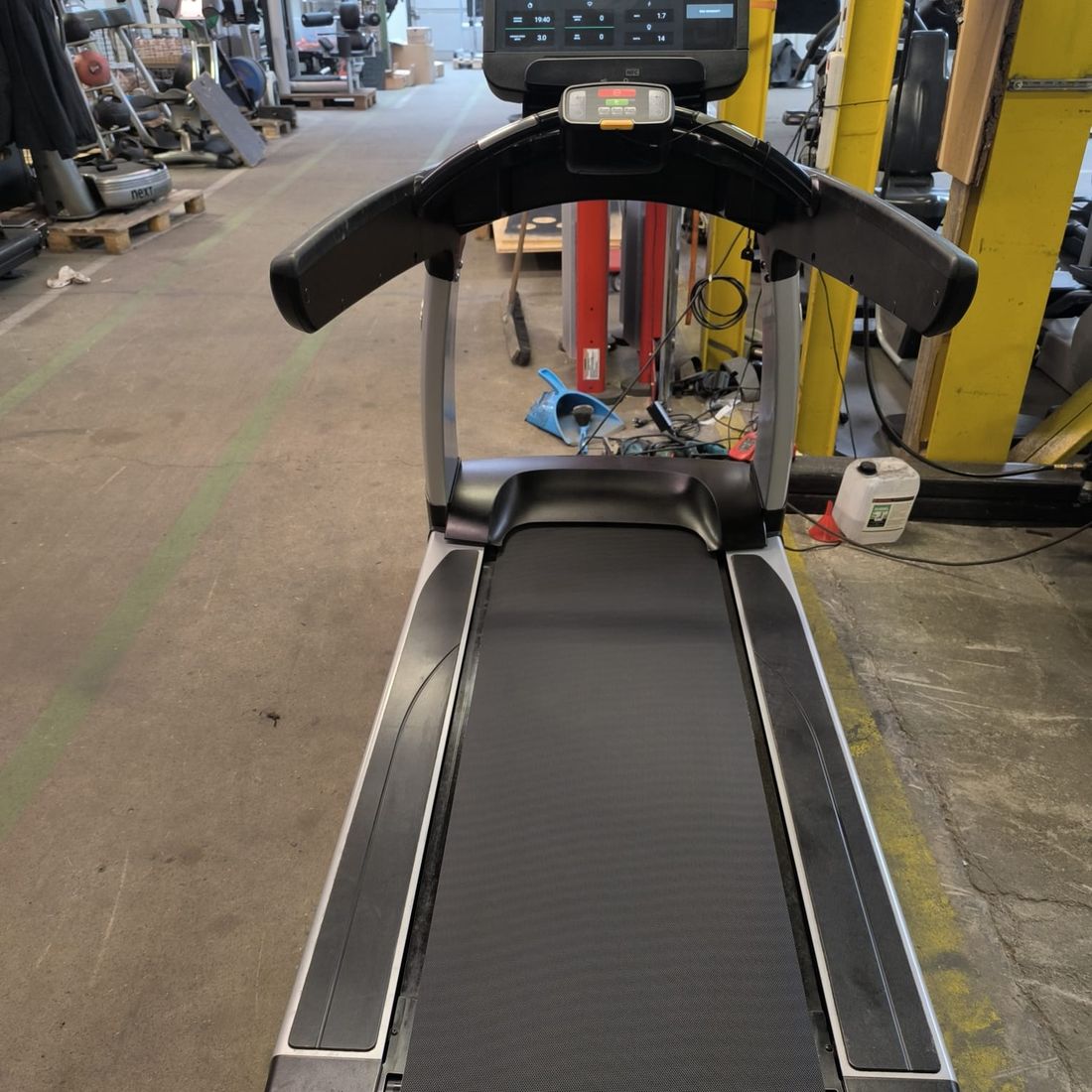
Test run after the repair


Coverage
Repairs throughout the Grand Duchy
We repair fitness equipment across the whole of Luxembourg — in the capital and the surrounding communes, in the industrial south around Esch-sur-Alzette, Differdange and Dudelange, along the Alzette and Sûre valleys towards Mersch, Ettelbruck and Diekirch, in the Éislek around Wiltz and Clervaux and in the east from Grevenmacher through Echternach to Remich and Mondorf-les-Bains.
Because the distances are short, we can group appointments: several machines at one site, or several sites in the same region on the same day. For commercial customers with more than one location this is usually the most efficient way to organise repairs.
- On-site repair anywhere in Luxembourg
- Several machines during a single visit
- Route planning for multi-site operators
- Coordination with your opening hours

Related services
What often follows a repair
- MaintenancePrevent the next failure instead of waiting for it
- Technical inspectionCheck the condition of the remaining machines
- Installation & assemblyWhen replacement really is the better option
- Who we work forClubs, hotels, municipalities, schools, homes
- Fitness equipment serviceAn overview of everything we do in Luxembourg
Repair FAQ
Questions about equipment repair
My treadmill makes a loud noise but still runs. Is that urgent?
Usually yes — not because the machine will stop tomorrow, but because noise is almost always wear that is progressing. A worn roller bearing that is replaced early costs a fraction of a roller that has damaged the belt and the deck. Send us a short video with sound; that alone often identifies the component.
The console shows an error code. Can you fix that?
Error codes point to a subsystem — speed sensor, incline motor, communication with the lower board, power supply. We use the code as a starting point and verify the actual cause on the machine. Please send us the exact code and the manufacturer and model, as the same code means different things on different brands.
Do you repair equipment that is out of warranty or discontinued?
Yes, and that is a large part of our work. Mechanical components are often still available or substitutable. Electronics for discontinued models can be the limit — in that case we say so before you spend money on a call-out.
Can you repair several machines during one visit?
Yes. Send a list of the machines with their faults and we plan time, parts and sequence in advance. For commercial customers this is the normal way we work.
Do you repair privately owned equipment at home?
Yes. Home treadmills, cross trainers, rowers, bikes and multi-gyms are repaired in the same way as commercial equipment. Please mention the access situation — floor, lift, stairs — when you send your request.
What happens if the repair is not worthwhile?
We tell you. If the cost of parts and labour approaches the value of the machine, or if the frame or a core component is damaged beyond sensible repair, we recommend replacement and — if you wish — help with the disassembly and the installation of the new equipment.
Do you also carry out maintenance during a repair visit?
That is usually sensible. While the machine is open, checking belts, bolts, cables and bearings costs little extra time and often prevents the next call-out. Just tell us in advance so we can schedule it.